Finish Empty.

Mike Ratnofsky • April 24, 2025

We Don't Coast. We close strong. We finish empty.


Hey C2 family,


You’ve made it through four weeks of The C2 Code.

You’ve reframed setbacks.

You’ve anchored into control.

You’ve owned the space between.


Now we end the way we train:

With intent.

With composure.

With nothing left in the tank.

Most people coast.


They slow down in the last round.
They pull back when the end is in sight.
They say, “That’s probably good enough.”


Not here.
Not with us.


We don’t coast. We close.
We finish empty.


What It Means to Finish Empty:

  • You bring your full presence — even when you’re tired.
  • You give your last set the same attention as your first.
  • You leave the gym knowing you didn’t hold back.


Not to impress. Not to post.
But because 
that’s who you are when it counts.


What This Looks Like at C2:

  • You don’t pace the end of the WOD. You lean in.
  • You coach someone else up even when you’re wiped.
  • You finish with breath and posture — not burnout or panic.
  • You show up on a Thursday with the same fire as Monday.


We don’t just train performance.
We train how to 
close.


What This Looks Like Outside the Gym:

  • You finish the workday like a pro — not like someone waiting for the clock.
  • You finish your commitments — to your kids, your people, your word.
  • You walk away from hard things with your head up, not your gas tank half full.


Because the way you do the last rep?
That’s how you’ll live the rest of your life.


Why It Works (And What the Science Says):

  • Athletes who finish with focus perform better long-term (Stulberg & Magness, 2017)
  • “Effort-driven fatigue” leads to greater adaptation (Henneman’s Size Principle, 1965)
  • People remember how they finish more than how they start (Kahneman’s Peak-End Rule)


This Week’s Challenge:


Pick one moment — inside or outside the gym — and finish it like it matters.


  • Final set? Nail your posture.
  • Final minutes with your family before work? Make eye contact.
  • Final rep of the week? Make it clean.
  • Finish empty. Walk out proud.

What’s Next:


This post wraps the C2 Code — but not the journey.


Next week, we step into something deeper:
Fatherhood. Leadership. Legacy.


The Dad Code launches next Thursday.


Whether you’re a dad or training to lead like one — this one’s for you.

You don’t need more noise. You need more intention.


Onward and Upward.

Mike


Sources:

Stulberg, B., & Magness, S. (2017). Peak Performance: Elevate Your Game, Avoid Burnout, and Thrive with the New Science of Success. Rodale.

Henneman, E. (1957). Relation between size of neurons and their susceptibility to discharge. Science, 126(3287), 1345-1347.

Kahneman, D., Fredrickson, B.L., Schreiber, C.A., & Redelmeier, D.A. (1993). When more pain is preferred to less: Adding a better end. Psychological Science, 4(6), 401-405.
By Mike Ratnofsky December 10, 2025
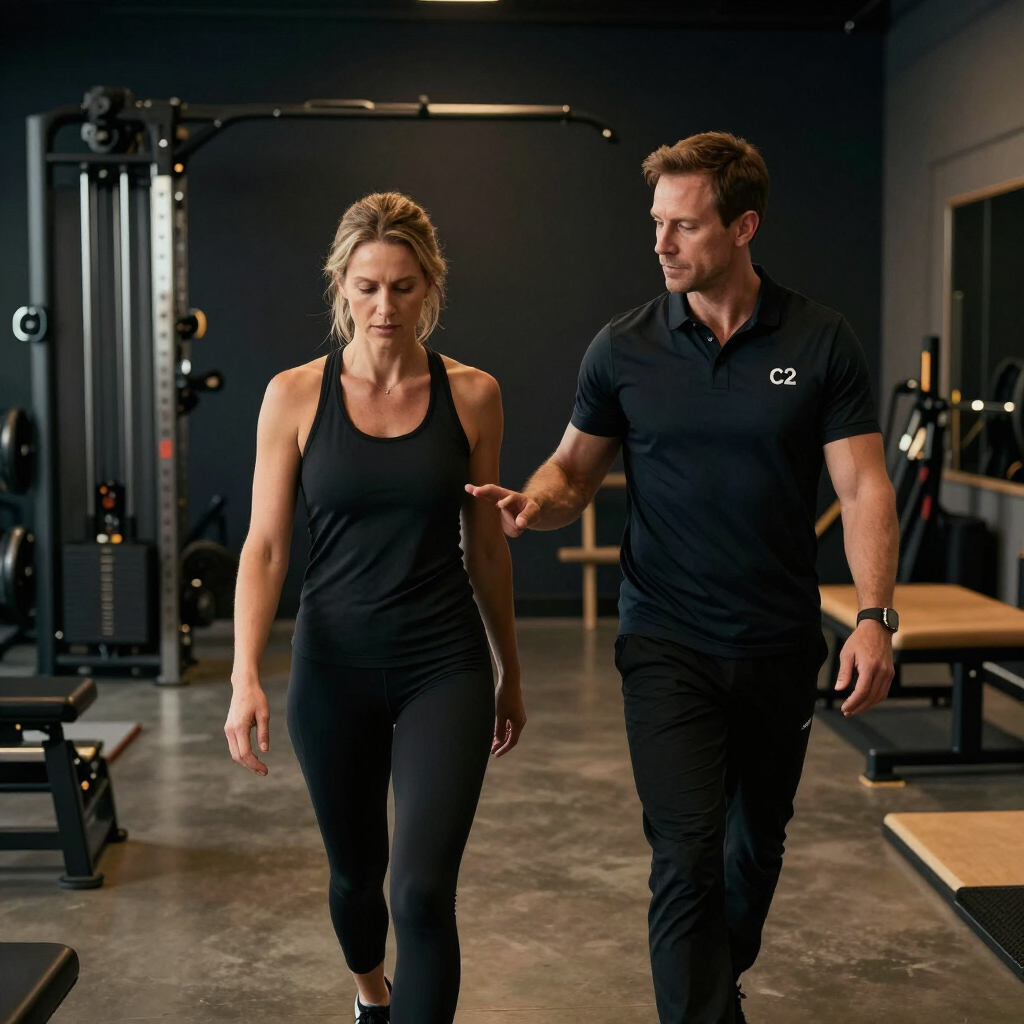
Most adults don’t struggle because of a lack of effort. They struggle because their training, lifestyle, and recovery needs were never designed for their body. Traditional group classes treat every athlete the same. Same movements, same frequency, same expectations. But people adapt differently. Bodies respond differently. Stress levels, recovery capacity, hormone profiles, and sleep quality all vary. When the plan ignores that, results suffer. This is why C2 was built around a different idea. Your training should fit you, not the other way around. You train in a group environment, but the intention behind your plan is personalized. Your physiology, your schedule, your goals, your current season of life. The group provides the energy, accountability, and support. The personalization creates the actual progress. Why individualization matters The American College of Sports Medicine states that training must follow the principle of individual variability. Two athletes can complete the same workout and experience completely different adaptations. Research from the Journal of Applied Physiology shows that muscle protein synthesis and recovery can vary by more than 50 percent between individuals. Strength, work capacity, and movement quality improve at different rates for different people. Your training needs to match your body’s response, not someone else’s. How often you train matters Most adults make real progress on two to four strength-based sessions per week. But the right number depends on stress levels, sleep patterns, recovery capacity, and training history. Someone in a high-stress season may progress better with fewer focused sessions. Someone with years of training may thrive on a higher frequency. At C2, we help each athlete find an exact weekly rhythm that supports adaptation rather than fights against it. Accountability is personal Behavioral research from the American Psychological Association highlights that people respond to accountability in different ways. Some athletes stay consistent because they have structured sessions to complete. Others stay consistent because a coach is expecting them. Many thrive because the environment around them reinforces effort. This is why our hybrid accountability model works. We match the structure to the person so consistency becomes natural, not a constant battle. Where wellness fits into personalization Training is only one piece of the progress equation. Some athletes need deeper wellness support to optimize sleep, stress management, digestion, recovery, or hormone balance. Others do not. That is the point. It is individualized. Some people benefit from labs or targeted supplementation. A small percentage benefit from peptides or medical interventions under supervision. Many athletes need none of these tools. We recognize both realities. Our job is not to push wellness tools. Our job is to understand the whole picture and help each athlete find the right combination of training, recovery, nutrition, and, when appropriate, medically supervised support. This also includes knowing when to refer someone to a trusted professional outside the gym based on true need, not trends. Group training doesn’t have to mean generic training A well-designed group setting creates energy and consistency, but the progression inside it must be individualized. You may be training alongside others, but your plan is your own. Training volume, tempo, loading, progressions, wellness considerations, and accountability strategies are matched to the individual, not the room. This is what makes progress sustainable. Research from the University of New England shows that people training in supportive group environments stay more consistent and enjoy their training more. When that environment includes individualized progression, improvements in strength, body composition, and overall well-being increase significantly. This is the model we run at C2. Individual plans. Individual accountability. Individual pathways. A supportive room around you that elevates your effort. Real training designed for real people who want results that actually last.
By Mike Ratnofsky November 26, 2025
GLP one medications are powerful, but the real magic happens when they are paired with a healthy lifestyle GLP one medications like semaglutide and tirzepatide have taken over every conversation in health and wellness. More people than ever are turning to medical support to finally break through years of weight struggles, insulin resistance, and metabolic dysfunction. These medications work by slowing gastric emptying, improving blood sugar control, reducing cravings, and increasing satiety. All of this contributes to steady, reliable weight loss for people who have previously felt stuck. But here is the truth that most people misunderstand. GLP one medications are not a magic fix on their own. They become truly life changing when combined with strength training, protein centered nutrition, proper hydration, structured sleep, and lifestyle support. In other words, the medication is the accelerator but the habits you build are the engine.
By Mike Ratnofsky November 10, 2025
If you’re a woman in your 40s or 50s navigating perimenopause or menopause, you’ve likely experienced the frustrating truth of midlife metabolism: the “eat less, move more” advice doesn’t seem to work anymore. The real issue? Your hormones — especially cortisol and leptin — may be working against you when it comes to weight loss, energy, and performance. And if you’re doing high-intensity workouts without adjusting your recovery and nutrition strategies, you might be doing more harm than good. Let’s break it down.
Show More