Start With a Plan or Start With a Guess.
What the Performance Assessment is,
and why your first 12 Weeks predict the next 5 Years.
Every gym lets you start. Almost none of them ask where you are starting from.
The industry default works like this. You sign up, you get pointed at a class schedule, and you drop in. The coach meets you for the first time ten minutes before the workout starts, learns your name, maybe hears about your shoulder if you remember to mention it, and then does their best in real time. You repeat that for a few weeks and hope it adds up to something.
To be clear, you have every right to start that way. Our classes are coached, every movement gets adjusted to your level, and plenty of people have built years of progress from a simple drop in. Starting anywhere beats not starting.
But here is the question worth sitting with. If you were dealing with anything else that mattered this much, your finances, your career, would you rather begin with an actual evaluation of where you stand and a plan built from it, or would you rather drop in and hope it works out over time?
That is the entire reason the Performance Assessment exists.
The industry standard, and why it is not enough
The functional fitness world already half agrees with us. That is why nearly every gym runs some version of foundations, a short intro course before you join the room. And the gate for skipping it is experience. Trained somewhere else for six months, a year, a year and a half? Walk straight in.
Here is the problem.
"Experience is not evidence."
Six months at another gym tells us nothing about your training age with technical lifting patterns. Nothing about whether your shoulders have the range for gymnastics movements. Nothing about your surgical history, your physical therapy history, or your goals beyond the fifteen minute conversation someone once used to sell you a membership. Maybe group class is exactly right for you on day one. Maybe a few personal training sessions come first. Maybe the right answer for this season is a strength only track. Prior experience answers none of that. An assessment answers all of it.
Foundations teaches everyone the same movements and calls it onboarding. An assessment sits down with the person: full training history, health history, goals, movement, and strength, then builds a plan that is actually theirs, with a coach who becomes a point of contact instead of a stranger at the whiteboard.
What guessing actually costs
Dropping into classes without a baseline is not dangerous at a well coached gym. It is just slow, and slow in ways you cannot see.
You do not know your body composition, so you cannot tell whether the scale moving means fat loss or muscle loss. You do not know your movement limitations, so you find them by accident, usually mid workout. You do not know your strength baseline, so you cannot tell the difference between progress and random variation. And nobody has connected any of it to your actual life: your goals, your schedule, your training history, your injuries, the reason you walked in the door in the first place.
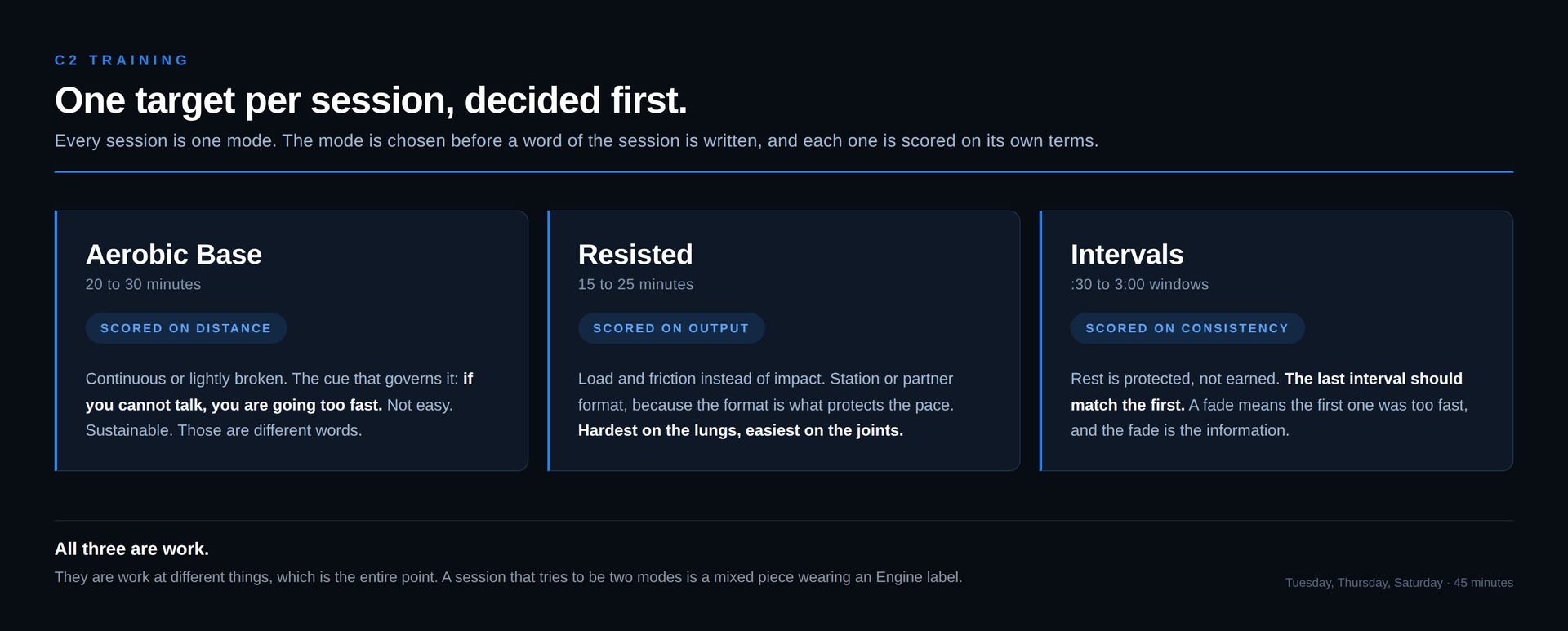
Without that picture, class selection is a guess too. Seven formats run at C2, each built to do something different. Which ones fit you depends on where you are and what you are chasing. A guess might land right. An assessment lands right on purpose.
"Both doors lead into the same gym. One of them turns the lights on first."
What the Performance Assessment is
75 minutes, private, with a coach. You walk out with more than a workout recommendation. You walk out with a picture of where you are and a plan for where you are going.
The first 15-20 minutes is spent getting to know you, your training history, goals, health and following up your intake assessment.
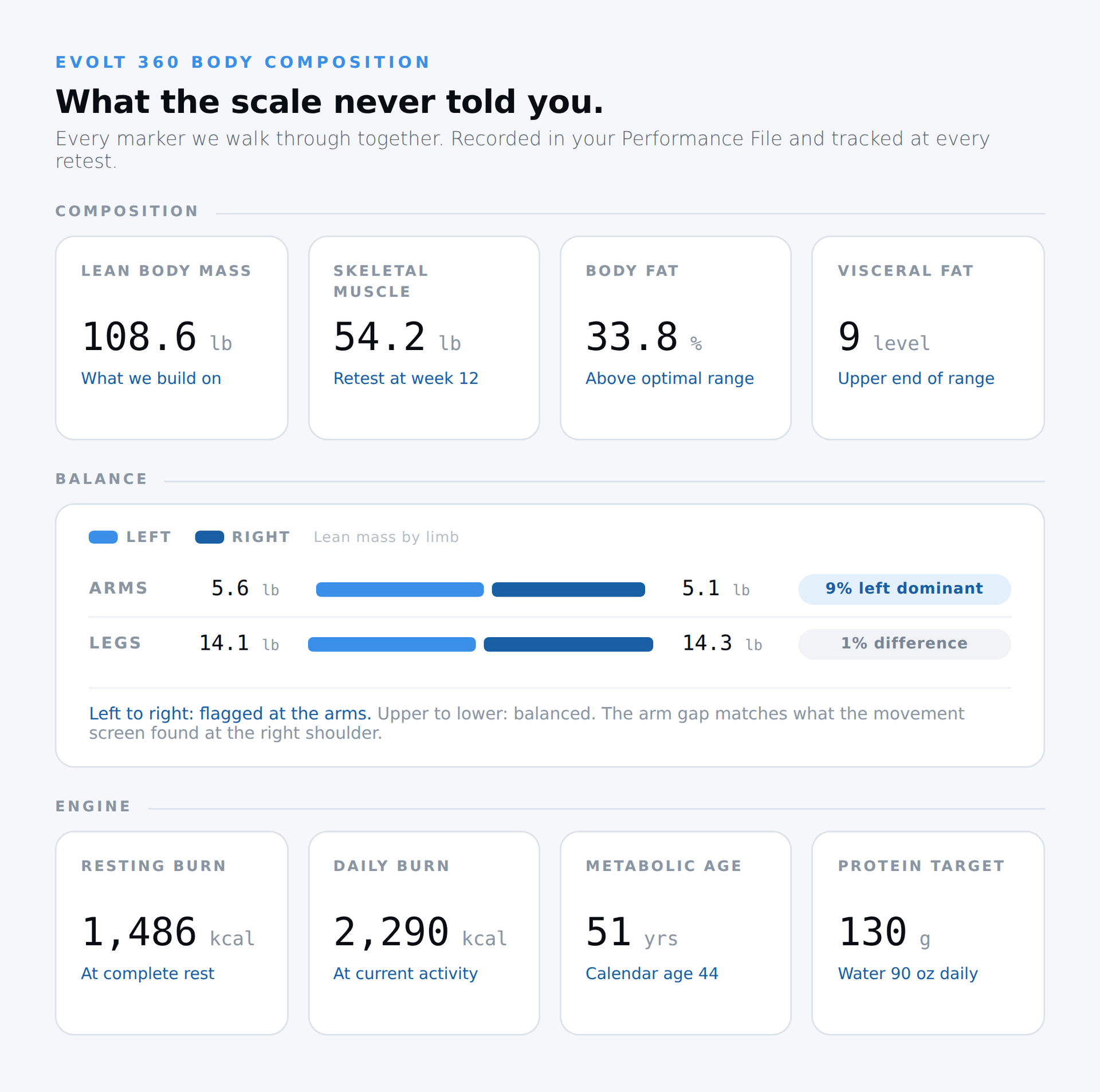
The 2nd piece is an Evolt 360 body composition scan. Sixty seconds standing on the machine, and your starting line stops being a bathroom scale.
The scan returns more than 35 markers and you keep every one of them. Three of them change what we do with you, so those are the ones that go on your report.
What you are made of. Lean body mass first, then skeletal muscle, body fat, and visceral fat. Most people brace for this part to be about what they want to lose. It is mostly about what there is to build on, because lean mass is the thing that protects everything else as you get older.
How you are balanced. The scan reads each arm and each leg on its own, so a difference between your left side and your right stops being a feeling and becomes a number. Nobody expects this part. It is also the part that most often changes your first month, because a real gap between sides is a coaching decision, not a curiosity.
What you run on. What you burn at rest, what you burn on a normal day, and the protein and water targets that come out of both. This is where the nutrition conversation starts, with your numbers instead of a rule someone read online.
Sixty seconds gets you the data. The hour after it is where the data turns into a plan.
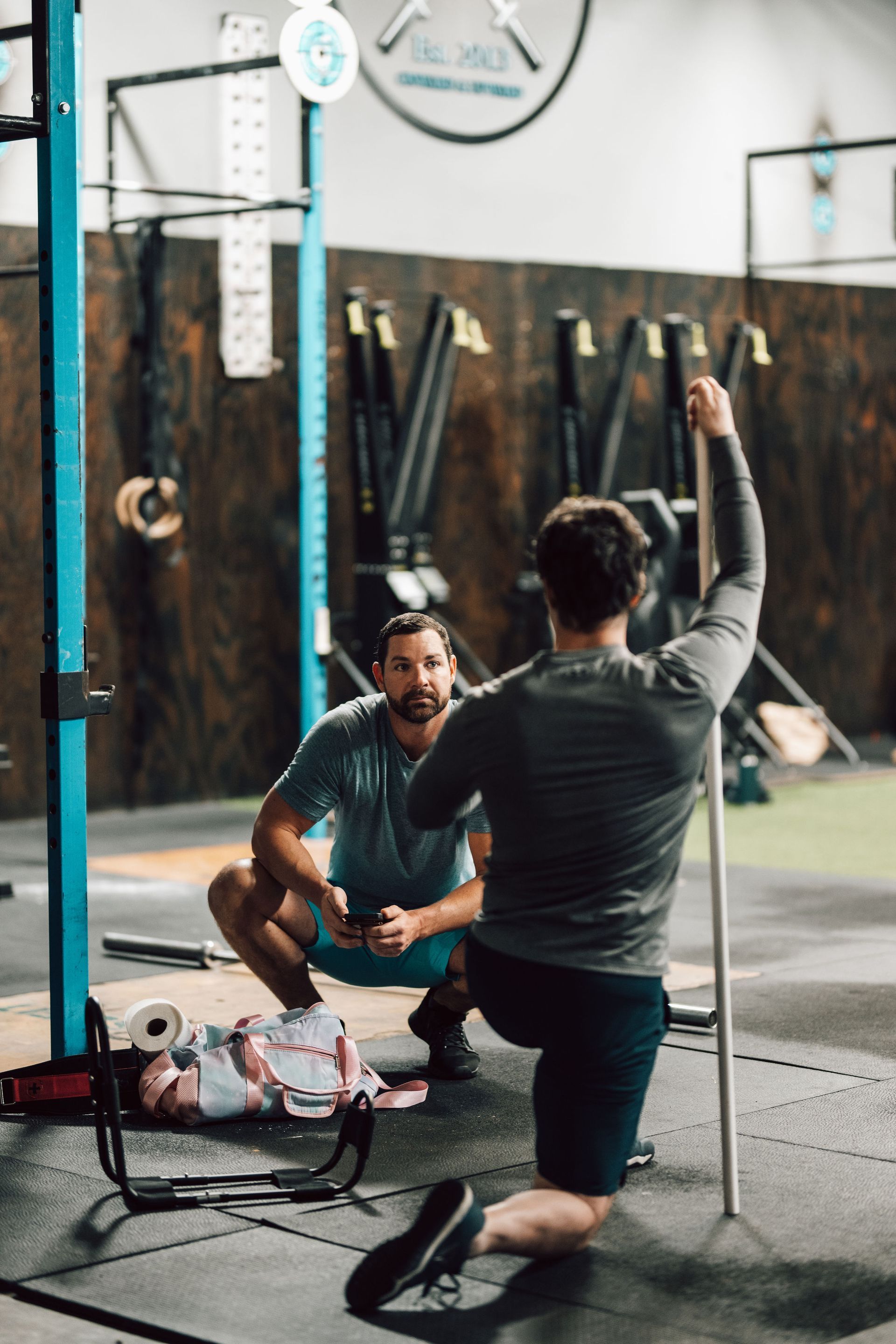
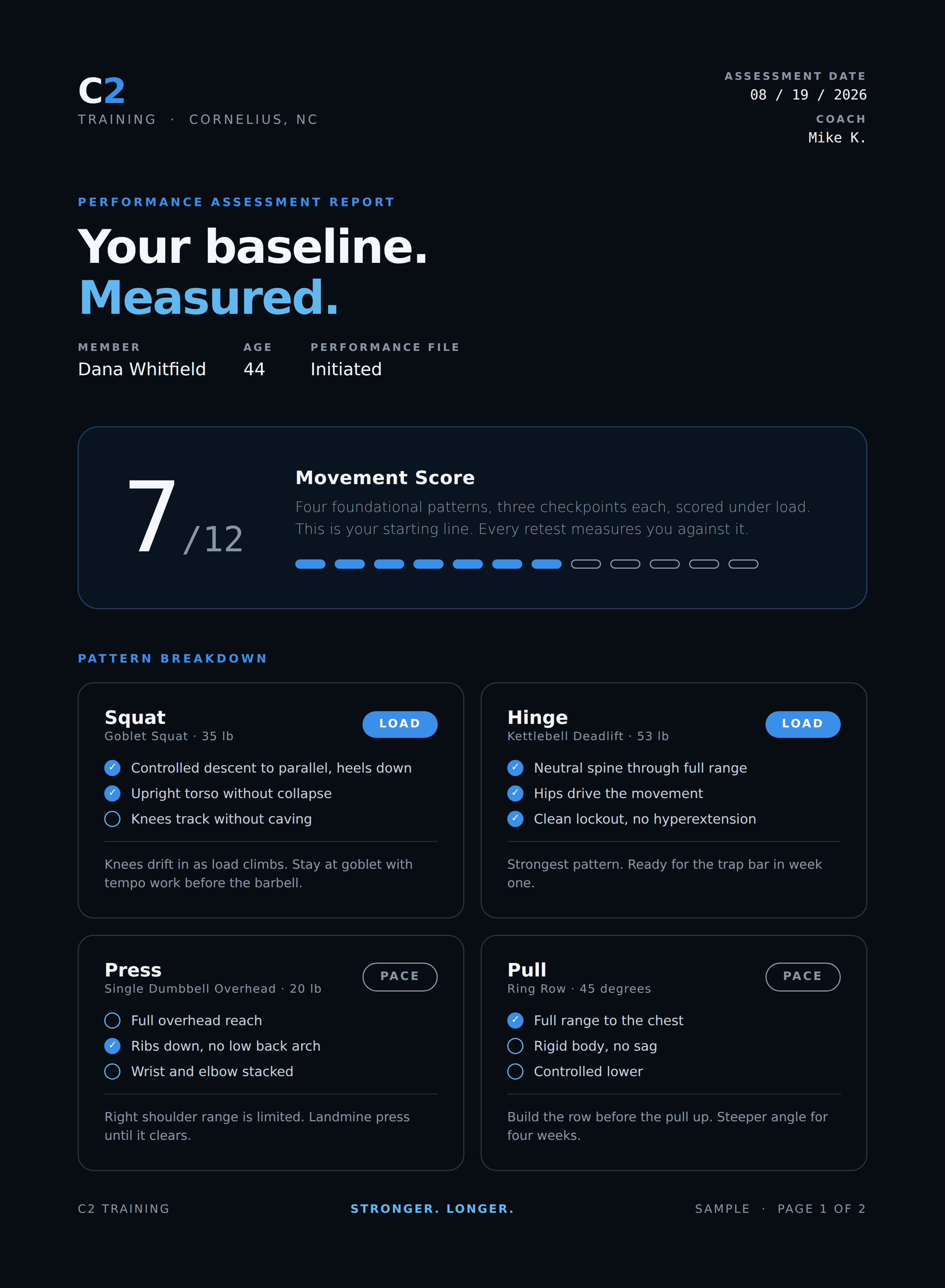
The third piece is our own C2 Movement Quality Screen. We watch how you squat, hinge, push, and pull before load ever enters the picture. What moves well gets trained hard. What does not, gets addressed instead of aggravated. You will be able to walk away from the screen with a clear picture of if you able to add load, what caveats there might be to certain movement patterns and a game plan on how to approach strength training around your current stability and mobility strengths and/or limitations.
After the C2 Movement Assessment Screen we head back into the office for a nutrition conversation. Not a meal plan, a starting framework: baseline targets for protein, water, and the fundamentals that make training actually produce results, with a path to our registered dietitian when you want to go deeper.
A clinical eyes check. If pain or a recurring injury walks in with you, we say so, and with a doctor of physical therapy working on site, "see someone first" means walking to the other side of our training floor, not starting over across town. Sometimes the strongest first month includes PT before the barbell.
Very few gyms can offer that. We can.
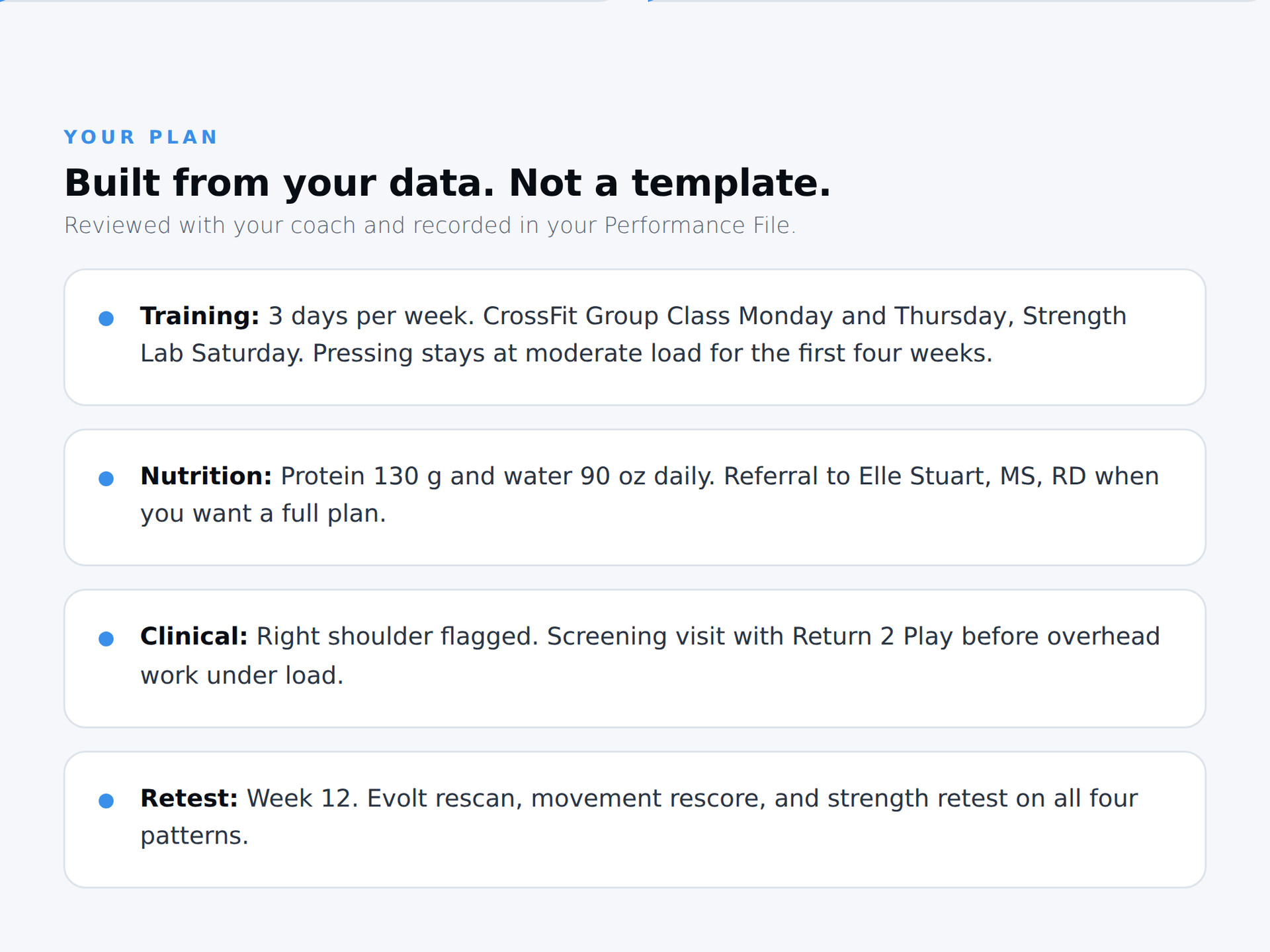
And your 90 day game plan. A written plan for your first three months: which classes, how many days, what to prioritize, and when we retest, built around your goals, your lifestyle, and what your body told us in the first hour.
Why the first month matters more than any other
We went back through our own 13 years of membership data and found something that changed how we think about new members. The strongest predictor of whether someone is still training with us 5 years later is not intensity, not athletic background, not age.
It is how many of their first thirteen weeks they showed up in. Members who trained in 11 or 12 of their first 12 weeks (meaning coming to 1 or more classes almost every week) stayed nearly four years on average. Same data on people who showed up to 1 or more classes 4or fewer out of the first 12, were typically gone in 7 months.
The first month is where people decide they belong. A plan built for your actual body and your actual schedule is how the first month goes right. That is not sales language. That is our own retention data talking. For record our current average membership length is 56 months or almost 5 years.
The honest comparison
Option 1: Drop-in First - you start today, your coach adjusts on the fly, and your picture of where you stand gets assembled slowly, class by class, over months.
Option 2: Assessment first - you start with the picture already assembled. Your coaches know your baseline before your first class. Your first 90 days run on a written plan instead of momentum and hope. And at retest, you put the new numbers next to your baseline and see the change in facts instead of guessing in the mirror.
"Both doors lead into the same gym. One of them just turns the lights on first."
So let us be precise about the claim, because we are not saying the assessment is the only way, and we are not saying dropping in cannot work. People have built years of progress here starting from a simple drop in. What we are saying is what we have watched over more than a decade of coaching: the members who start with an assessment start with a plan, and the ones who start with a plan succeed at a higher rate over the long term. Success rates vary. Starting with the full picture stacks the odds.
The Performance Assessment is 75 minutes and $199, and it is the strongest possible start we offer. Plus if you decided to join, we apply $100 of your Performance Assessment fee to your first month's membership or personal training sessions dependent on your direction.
Would you rather know, or would you rather hope? Either answer is welcome here. Come talk it through with a coach and decide what the right start looks like for you.
Onward and Upward
Mike
Schedule your performance assessment with me here: